
Bathroom Remodel Cost Estimate by Region: Pricing Benchmarks
Short answer
A midrange bathroom remodel costs $26,138 on average nationally, according to the Journal of Light Construction's 2025 Cost vs. Value Report, and Zillow puts the Pacific region at $27,710 and New England at $27,559. City prices vary more: NerdWallet reports about $20,000 in Los Angeles but just under $12,000 in Brooklyn and Dallas. San Francisco's 2022 building cost schedule adds $20,552 per remodeled bathroom.
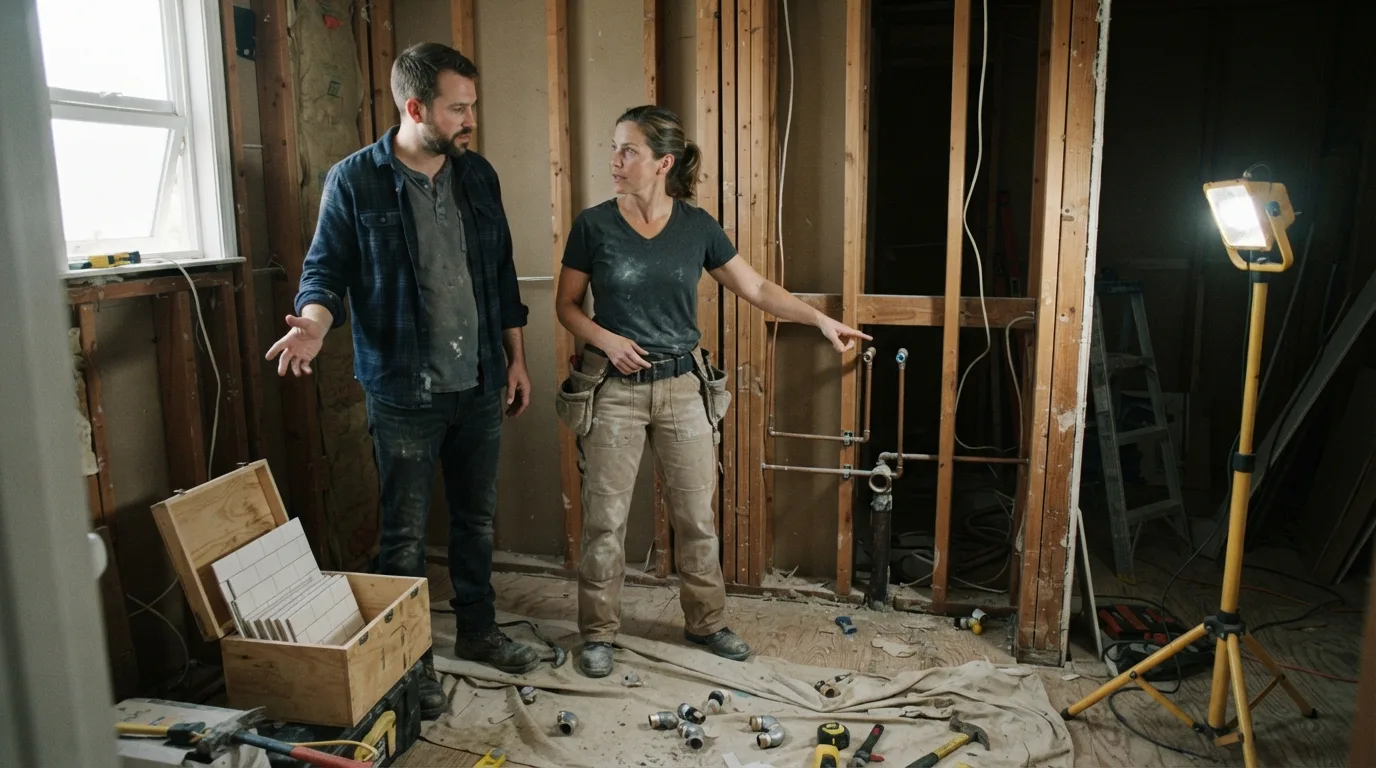
National and Regional Cost Benchmarks for Bathroom Remodels#
Midrange bathroom renovations require realistic baseline capital projections before any structural or finish work begins. In the Journal of Light Construction 2025 Cost vs. Value Report, the national average job cost for a midrange bath remodel is $26,138, (jlconline.com) which recoups $20,915 at resale.
Regional property values and material pipelines create defined variance across broader geographic zones. According to Zillow, the average cost of a midrange bathroom remodel in the Pacific region (comprising California, Hawaii, Washington, Oregon, and Alaska) is $27,710, (zillow.com) yielding a 91% return on investment with $25,217 recouped at resale. For the New England region (encompassing Connecticut, Massachusetts, Maine, New Hampshire, and Vermont), Zillow reports an average remodel cost of $27,559, with $24,937 recouped at an ROI of 90.5%.
| Region or Metric | Scope Level | Average Job Cost | Recouped Resale Value | Source & Vintage |
|---|---|---|---|---|
| National Average | Midrange | $26,138 (jlconline.com) | $20,915 (80%) | Journal of Light Construction (2025) |
| Pacific Region | Midrange | $27,710 (zillow.com) | $25,217 (91%) | Zillow |
| New England | Midrange | $27,559 (zillow.com) | $24,937 (90.5%) | Zillow |
Planning a standard wet area remodel (the targeted renovation of tubs, showers, and plumbing enclosures) requires allocating funds based on whether the floor plan remains fixed or walls are moved. An owner evaluating an investment must contrast broad national baselines against targeted regional figures to protect returns.
Metro-Level Cost Disparities and Contractor Demand Factors#
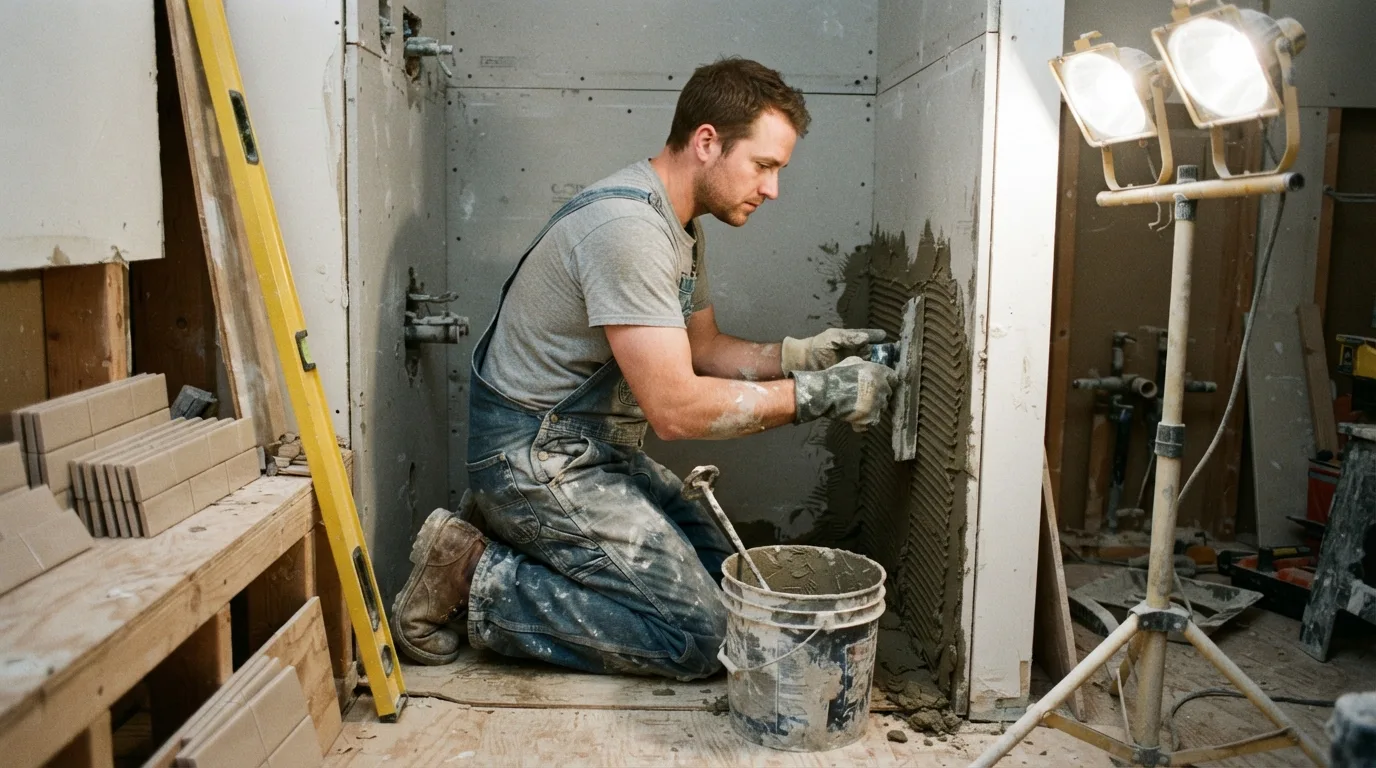
Metropolitan pricing exhibits severe decoupling from standard macro cost-of-living assumptions. A bathroom remodel costs about $20,000 (nerdwallet.com) on average in Los Angeles, California, but falls to just under $12,000 on average in Brooklyn, New York, and Dallas, Texas. This structural spread underscores that a high baseline cost of living does not uniformly dictate high residential remodeling quotes.
- Evaluate local labor market
- Scope structural vs wet-area
- Pull municipal fee schedules
- Compare contractor bids
Subcontractor capacity and local construction volume fundamentally dictate these spreads. Residential repair and remodeling labor and contractor rates vary by region and contractor expertise, with urban areas or regions experiencing high demand for construction work often having higher prices (webdev.jacksonms.gov). When localized building booms absorb general contractors, basic retail renovation pricing accelerates independently of core material wholesale prices.
Home services marketplace mechanics operate precisely to solve this regional bidding friction by surfacing actual project quotes across adjacent zip codes. When market demand intensifies, vetting capacity early ensures capital commitments track actual trade realities rather than initial architectural projections.
Municipal Valuation Schedules and Square-Foot Base Rates#
Building departments evaluate project scopes using statutory cost-per-square-foot schedules to determine regulatory oversight and tax bases. Under the San Francisco Department of Building Inspection (DBI) 2022 Cost Schedule, tenant improvement restrooms or kitchens carry an estimated unit cost of $493 (media.api.sf.gov) per square foot, applied strictly to the square-foot area of those rooms.
Total Valuation = (Bathroom Area in sq ft × 493) + 20,552
Residential projects inside the same jurisdiction encounter fixed additions. Under San Francisco's 2022 DBI Cost Schedule for residential remodels, the additional cost for each new or remodeled bathroom is $20,552, (media.api.sf.gov) applied directly on top of the residential remodel square-foot base rate. These mandated municipal metrics directly establish the baseline valuations that building officials apply to verify declared project scopes.
Local Permitting Fees, Inspection Stages, and Code Requirements#
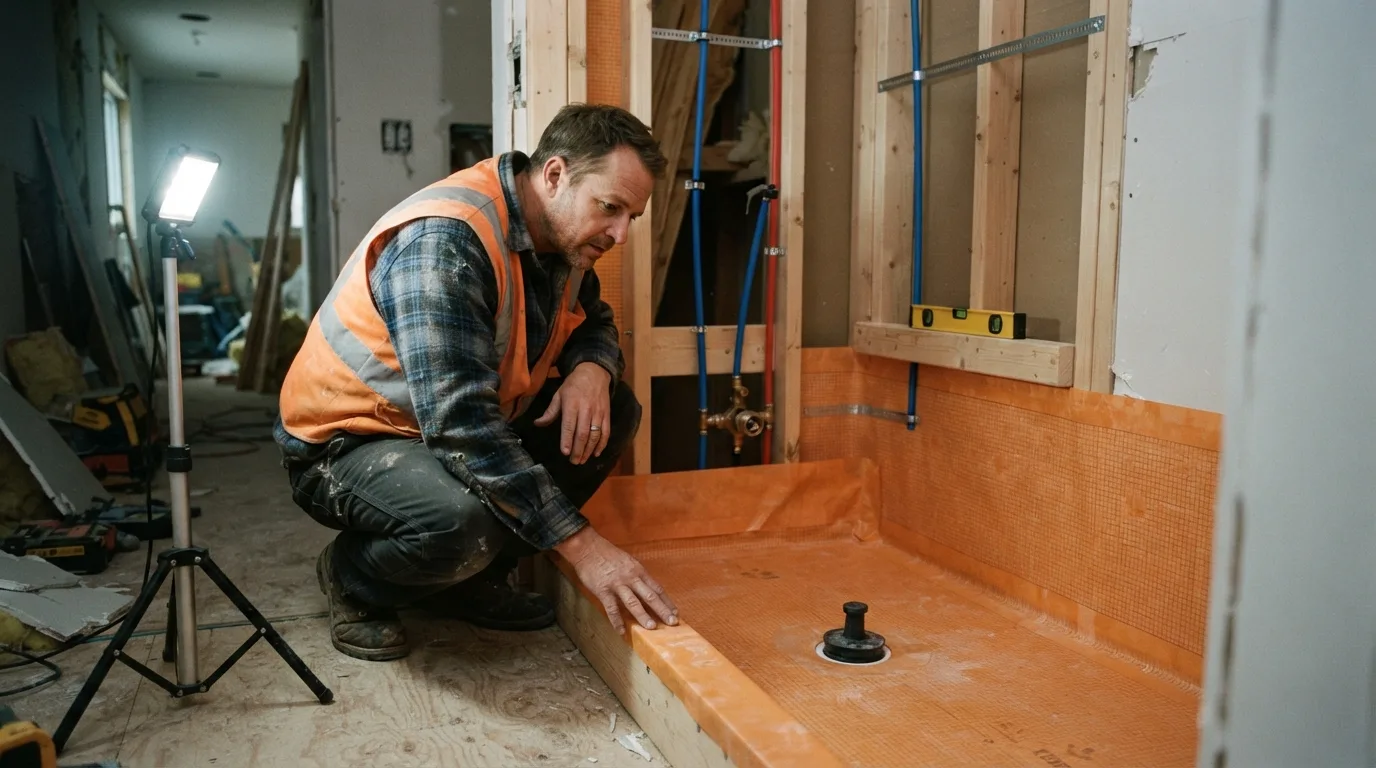
Permit fee formulas introduce localized soft-cost friction that must be accounted for within any project budget. In Mountain View, California, bathroom remodel permit fees including inspection fees range from $800 to $1,100, (developmentpermits.mountainview.gov) which works out to approximately $120 per square foot depending on bathroom square footage. Conversely, Boston Inspectional Services Department (ISD) schedules specify permit fees typically ranging from $150 to $900 (kaamcam.com).
Code oversight mandates sequential administrative phases before enclosures can be sealed. Boston ISD requires 3 to 5 inspections for a bathroom remodel, covering rough plumbing, rough electrical, framing, and final inspection (kaamcam.com).
Technical standards also regulate moisture mitigation and indoor air quality. Boston ISD enforces a minimum ventilation standard of 50 CFM (cubic feet per minute, a standard unit of airflow volume) for bathroom remodels and no longer accepts tile and grout as shower waterproofing (kaamcam.com).
Trade Labor Criticality, Project Delays, and Bid Spreads#
Trade labor constraints drive project timelines and overall cost exposure. Across the primary construction trades, research documents that the electrical trade emerges as the foremost critical trade in cost criticality valuation and ranks second in schedule criticality valuation (scholarsmine.mst.edu). In that same assessment, plumbing ranks fifth in both cost and schedule criticality valuations.
A lack of skilled labor and corresponding lengthened construction cycle times resulted in an estimated industry cost impact of $2.663 billion (hbi.org) across 1,009,000 preliminary single-family housing starts in 2024. The estimated average total financial cost per single-family home attributable to the lack of skilled labor is $2,639, representing a 0.62% cost impact for a typical newly built home.
| Criticality Metric | Electrical Trade Ranking | Plumbing Trade Ranking | Macro Impact Measure |
|---|---|---|---|
| Cost Criticality | 1st | 5th | Trade complexity and skilled worker availability (scholarsmine.mst.edu) |
| Schedule Criticality | 2nd | 5th | Sequence-dependent trade milestone delays (scholarsmine.mst.edu) |
| Single-Family Home Premium | Not Evaluated Separately | Not Evaluated Separately | $2,639 average cost impact per home (hbi.org) |
| Industry Cycle Cost | Not Evaluated Separately | Not Evaluated Separately | $2.663 billion aggregate impact (2024) (hbi.org) |
Shortages also inject pricing dispersion into competitive procurement. Labor scarcity creates significant bid volatility because contractors price labor risk differently depending on workforce stability and confidence in subcontractor availability (ovabc.org). Furthermore, subcontractors prioritizing select clients or geographies can leave smaller or remote projects with fewer qualified bidders and higher unit costs. Maintaining an explicit contingency fund helps project managers manage scope creep and handle wide bid spreads.
Geographic Surcharges for Fixture and Material Delivery#
Material logistics introduce geography-based surcharges that alter fixture line items. Under the UPS 2026 Rate and Service Guide, a Delivery Area Surcharge applies to each package delivered to certain ZIP codes within the 48 contiguous states, while Alaska and Hawaii deliveries are referred to the Remote Area Surcharge (assets.ups.com).
Deliveries to non-contiguous territories or low-density routes absorb higher freight costs for heavy vitreous china fixtures, custom vanities, and stone slabs. Accounting for these accessorial fees prior to purchase orders prevents unexpected budget erosion on specialized finish shipments.
To protect your budget against regional market swings, take action this week:
- Audit your scope: Separate essential wet area infrastructure from elective cosmetic finishes.
- Confirm local fees: Check your city building department's fee schedules and mandatory inspection stages.
- Solicit competitive bids: Connect with vetted local crews already working nearby to compare transparent estimates against grounded benchmarks.
| Location / Jurisdiction | Metric Scope | Reported Cost or Fee Benchmark | Key Conditions or Authority |
|---|---|---|---|
| National | Midrange Remodel | $26,138 avg. job cost | 80% ($20,915) recouped at resale (JLC 2025) |
| Pacific Region (CA, HI, WA, OR, AK) | Midrange Remodel | $27,710 avg. cost | 91% ($25,217) recouped at resale (Zillow) |
| New England (CT, MA, ME, NH, VT) | Midrange Remodel | $27,559 avg. cost | 90.5% ($24,937) recouped at resale (Zillow) |
| Los Angeles, CA | Metro Remodel | ~$20,000 avg. cost | NerdWallet metro benchmark |
| Brooklyn, NY / Dallas, TX | Metro Remodel | Just under $12,000 avg. cost | NerdWallet metro benchmark |
| San Francisco, CA | Residential Remodel Addition | $20,552 per bathroom | Added to base remodel sq. ft. rate (2022 DBI Schedule) |
| San Francisco, CA | Tenant Improvement Restroom | $493 per sq. ft. | Applies to restroom/kitchen area only (2022 DBI Schedule) |
| Mountain View, CA | Permit & Inspection Fees | $800 to $1,100 (~$120/sq. ft.) | Required for all residential bathroom remodels |
| Boston, MA | Permit & Inspection Fees | $150 to $900 | Covers 3 to 5 inspections (Boston ISD) |
| Trade or Labor Factor | Cost Criticality Rank | Schedule Criticality Rank | Quantified Industry Impact |
|---|---|---|---|
| Electrical Trade | 1st | 2nd | Shortages drive cost and milestone delays |
| Plumbing Trade | 5th | 5th | Shortages drive nonconformance and rework costs |
| Skilled Labor Deficit (Per Home) | Not Ranked | Not Ranked | $2,639 avg. cost impact (0.62% of typical new home) |
| Skilled Labor Deficit (Aggregate 2024) | Not Ranked | Not Ranked | $2.663 billion across 1,009,000 housing starts |
Regional Bathroom Remodel Cost Estimator
Estimates the total cost and projected resale value recoup for a bathroom remodel based on regional cost factors, finish scope, bathroom size, and whether plumbing or walls are relocated.
Estimated Total Remodel Cost:
Cost per Square Foot:
Projected Value Recouped at Resale:
Frequently Asked Questions
What is the national average cost for a bathroom remodel?
The Journal of Light Construction 2025 Cost vs. Value Report puts the national average job cost for a midrange bath remodel at $26,138, with $20,915 (80%) recouped at resale.
Is $10,000 enough to remodel a bathroom?
That budget sits below the major benchmarks. The national midrange average is $26,138, per the Journal of Light Construction, and NerdWallet reports city averages from just under $12,000 in Brooklyn and Dallas to about $20,000 in Los Angeles.
What is a realistic budget for a bathroom remodel?
A realistic midrange budget spans $26,138 nationally, reaching $27,559 in New England and $27,710 in the Pacific region. City averages range from under $12,000 in Brooklyn and Dallas to $20,000 in Los Angeles.
Sources
- 2022 DBI Cost Schedule ANNOTATED ... - media.api.sf.gov (2024-12-20)
- Bathroom Remodel | Mountain View, CA - developmentpermits.mountainview.gov
- Means Residential Repair And Remodeling Costs - webdev.jacksonms.gov
- Skilled Labor Shortages and their Cost and Schedule ... - scholarsmine.mst.edu
- Cost to Remodel a Bathroom - houzz.com
- ROI for a Bathroom Remodel | Zillow - zillow.com
- Bathroom Remodel Cost in 2026: Is It Worth It? - NerdWallet - nerdwallet.com
- CVV Projects – Journal of Light Construction - jlconline.com
- Assets - assets.ups.com
- How the Skilled Labor Shortage Impacts Building Costs and ... - hbi.org
- Addressing the Construction Workforce Shortage: Strategies for Success - ovabc.org
- Boston Bathroom Remodel Permit 2026: Fees | KaamCam - kaamcam.com