
How to Find a Good Local Contractor: 2026 Vetting Guide
Short answer
To find a good local contractor, write down your project scope, expected materials, budget, and specific questions regarding permits, inspections, warranties, cleanup, and payment before seeking bids. Next, contact your local Home Builders Association and consumer protection officials to check for complaints against candidate businesses. Compare written estimates from multiple contractors, ensuring each details materials, labor, completion dates, and pricing. Finally, ask for proof of liability insurance before hiring.

Finding a reliable contractor requires looking past sales presentations and focusing on documented business practices, regulatory standing, and verified trade credentials. Homeowners face substantial financial risk when agreements lack concrete specifications or rely on verbal commitments. In California, for example, statutory rules mandate written contracts for major home improvement work, capping initial down payments at $1,000 (cslb.ca.gov) or 10 percent of the contract value; whichever figure is smaller.
Establishing a standardized procurement process protects property owners from downstream mechanic's liens, unpermitted structural work, and mid-project abandonment. The sections below outline how to systematically prepare project specifications, verify municipal credentials, analyze competitive bids, and structure protective agreements.
- Define scope and budget
- Verify state registration
- Check complaint records
- Confirm municipal permits
- Compare detailed bids
- Execute written contract
Checking Contractor Track Records, Business Accreditation, and Complaints#
Homeowners can research contractor history and potential disputes through official state and local consumer protection offices as well as regional trade groups. According to the Federal Trade Commission, consumers vetting candidates should contact their local Home Builders Association and state or municipal consumer protection officials to confirm whether any unresolved complaints exist on file (consumer.ftc.gov). Evaluating an operator across multiple public repositories uncovers systematic service failures before agreements are signed.
Supplementing formal regulatory checks with targeted search queries helps surface historical client experiences. Running online searches combining the business name with terms such as "scam," "review," or "complaint" provides broader insight into a firm's market reputation (consumer.ftc.gov). Furthermore, the Better Business Bureau (BBB) Business Directory enables consumers to filter search listings specifically for vetted BBB Accredited Businesses, which are held to established ethical standards (bbb.org).
| Vetting Channel | Verification Objective | Source Authority |
|---|---|---|
| State/Local Consumer Protection | Formal complaint records and deceptive trade inquiries | Federal Trade Commission (consumer.ftc.gov) |
| Local Home Builders Association | Trade standing and regional business history | Federal Trade Commission (consumer.ftc.gov) |
| BBB Business Directory | Ethical accreditation status and verified ratings | Better Business Bureau (bbb.org) |
| Online Search Query Modifiers | Patterns of disputes, reviews, or reported scams | Federal Trade Commission (consumer.ftc.gov) |
Verifying Contractor Registrations, Licenses, and Liability Insurance#
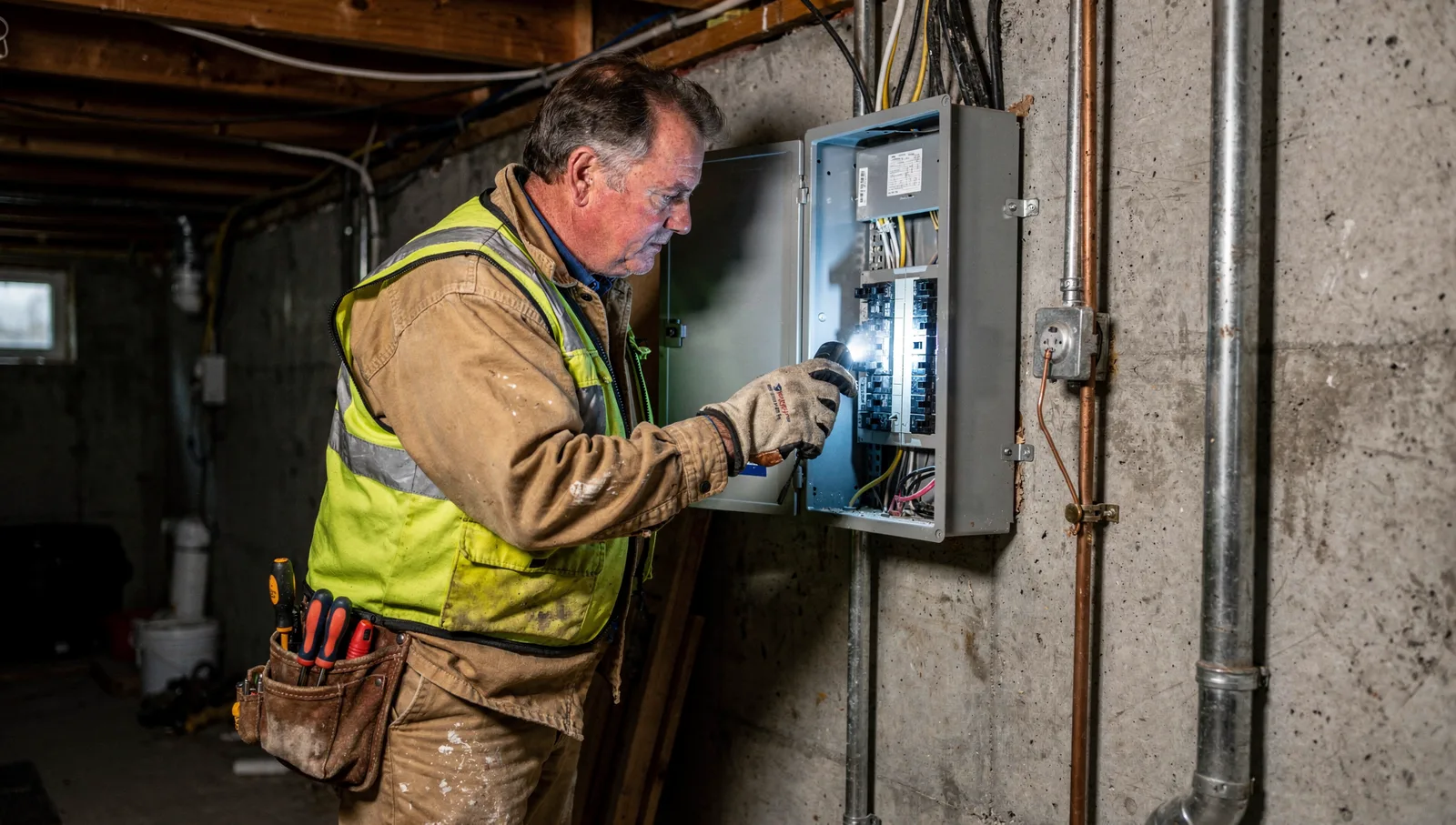
Consumers can check state contractor registries to confirm active business standing, though state registration alone does not guarantee craftsmanship quality or project success (iowaattorneygeneral.gov). As noted by the Iowa Attorney General, querying an official state registry serves as an initial verification step, though registration does not guarantee good work or project quality. This administrative check prevents hiring unregistered entities operating entirely outside regulatory oversight.
In addition to state standing, homeowners must request direct proof of commercial general liability insurance. The Iowa Attorney General advises consumers to verify active liability coverage to establish financial responsibility if personal injuries occur or private property is damaged during the build (iowaattorneygeneral.gov). Consumers should ask contractors for proof of liability insurance and determine who is responsible if property is damaged or someone is injured.
Municipal Building Department Requirements and Permit Procedures#
Local building departments enforce strict registration checks and documentation workflows before approving permits and commencing site inspections. In League City, Texas, the building department verifies that a contractor's registration remains current before issuing permits, releasing approved plan sets, or scheduling inspections (leaguecitytx.gov). Similarly, the City of Golden, Colorado requires all licensed trade contractors to be formally identified on the building permit prior to permit issuance (cityofgolden.gov).
San Diego also provides an optional Permit-Ready Letter confirming all administrative and technical clearances are met when a permit is approved but awaits issuance fee processing.
Other jurisdictions mandate trade documentation and multi-tiered departmental plan reviews before site work begins. In unincorporated Cook County, Illinois, permit packages require signed letters of intent from all participating registered contractors (cookcountyil.gov). The Cook County Department of Building and Zoning routes these filings across five specialized review disciplines:
- Architectural review
- Electrical compliance
- Plumbing systems
- Municipal zoning regulations
- Permit control and contractor registration verification (cookcountyil.gov)
To monitor progress, property owners in Cook County track plan deficiencies and application updates through the online Building Permit Status Search using their Property Index Number and assigned permit identifier (cookcountyil.gov). Comparable tracking occurs in the City of Columbus, Ohio, where applications route across relevant departments while progress updates populate the municipal Citizen Access Portal (columbus.gov). Finally, the City of Arvada, Colorado provides online public records lookup by permit number or address, sending an automated notification when all site milestones are completed and the permit is officially finaled (arvadaco.gov).
Defining Project Scope, Materials, and Budget Before Contacting Contractors#

Homeowners can document several foundational parameters before requesting contractor estimates to ensure accurate, comparable pricing. Per the Iowa Attorney General, project planning begins by writing down the specific work required, the expected materials, and a working budget (iowaattorneygeneral.gov). Outlining these constraints early establishes a consistent baseline so every responding builder bids on identical technical specifications.
In addition to physical project requirements, homeowners should prepare detailed questions addressing practical operational logistics. Setting these boundaries early prevents scope creep, which refers to uncontrolled changes or continuous growth in a project's scope without adjustments to time, cost, and resources.
- Document the exact tasks required across each room or structure.
- Specify preferred material grades, fixtures, and product finishes.
- Establish a firm budget ceiling that accounts for necessary project contingencies.
- Draft administrative questions regarding permit handling, warranty lengths, cleanup, and payment schedules.
Evaluating and Comparing Multiple Contractor Estimates#
Homeowners should gather itemized bids from several competing businesses rather than settling on an initial proposal. Obtaining multiple written estimates that clearly detail the project's scope of work, specified materials, anticipated completion dates, and total price (consumer.ftc.gov). Gathering standardized scopes ensures you are analyzing equivalent trade coverage rather than comparing incompatible summaries.
Total Variance = Bid Amount - Benchmark Average
Consumers should avoid automatically selecting the lowest bidder when reviewing contractor proposals (consumer.ftc.gov). As warned by the Iowa Attorney General, homeowners must remain cautious of unusually low figures that omit essential details regarding material grades, labor requirements, or complete scopes of work (iowaattorneygeneral.gov). Substantial discrepancies between proposals frequently indicate an under-scoped project that leads to unexpected mid-construction disputes or requests for additional funds.
Contract Provisions, Written Terms, and Change Orders#
A legally sound home improvement contract requires precise operational and legal provisions to safeguard both parties throughout construction. Guidance from the Federal Trade Commission highlights that signed agreements must state the contractor's formal business name, physical street address, telephone contact information, and license number (consumer.ftc.gov). The contract must also define clear start dates, target completion milestones, itemized material lists, inspection timelines, site cleanup responsibilities, and statutory cancellation rights (iowaattorneygeneral.gov).
| Standard Agreement Component | Operational Function | Supporting Regulation / Source |
|---|---|---|
| Contractor Identification | Documents trade license, physical address, and contact details | Federal Trade Commission (consumer.ftc.gov) |
| Defined Milestones | Establishes enforceable project start and completion dates | Federal Trade Commission (consumer.ftc.gov) |
| Scope & Material Details | Sets exact technical specifications, finishes, and daily cleanup | Iowa Attorney General (iowaattorneygeneral.gov) |
| Statutory Cancellation Notice | Outlines 3-day right to cancel if signed off-premises | Federal Trade Commission (consumer.ftc.gov) |
| Written Change Orders | Formally amends contract terms prior to executing modified work | California Contractors State License Board (cslb.ca.gov) |
When unexpected structural conditions or design updates arise on site, project terms cannot be adjusted informally. In California, any modification affecting the agreed contract price or scope of work must be executed through a written change order, which is an amendment describing scope adjustments and pricing variations (cslb.ca.gov). The California Contractors State License Board dictates that this document must be fully signed by both the customer and the builder before altered work begins. Enforcing written change orders protects the project from uncontrolled labor billings and ensures all alterations become binding additions to the primary contract.
To protect your budget this week, audit your current project preparations using the verified criteria above. Compile your written scope, verify your candidate's status through state licensing registries and municipal permitting portals. And confirm that every contract provision includes explicit milestone terms before transferring any deposit.
| Jurisdiction | Contractor & Permitting Requirements | Review & Tracking Mechanism |
|---|---|---|
| League City, Texas | Building department verifies registration is current before issuing permits, releasing plans, or scheduling inspections | Online Permit Portal for applications, fee payments, and review comments |
| City of Golden, Colorado | All licensed trade contractors must be identified on the permit before it can be issued | Online Permitting Portal for license applications, permits, and inspection requests |
| City of San Diego, California | Requires portal updates for contractor and subcontractor additions before work starts; offers Permit-Ready Letters | Online permitting portal manages clearance verification and subcontractor updates |
| Unincorporated Cook County, Illinois | Requires signed letters of intent from all registered contractors performing work on the project | Reviewed across five areas (architectural, electrical, plumbing, zoning, contractor registration); tracked via PIN and permit number |
| City of Columbus, Ohio | Permit authorizes work after plans are submitted, routed, and approved across relevant departments | Citizen Access Portal tracks plan review status across city departments |
| City of Arvada, Colorado | All permits require completed inspections before closing; records accessible by permit number or address | Arvada Permits website provides inspection tracking and automated closure emails |
| Vetting Stage | Key Verification Actions | Primary Purpose |
|---|---|---|
| Project Preparation | Document project scope, materials, budget, and permit questions | Establishes a uniform baseline across all contractor estimates |
| Reputation & Complaints | Check Home Builders Associations, consumer officials, and BBB directories | Identifies past deceptive trade practices and unresolved disputes |
| Credentials & Insurance | Check state contractor registries and request liability insurance certificates | Verifies legal authorization and ensures protection against property damage or injury |
| Bid Comparison | Collect multiple detailed written bids; question abnormally low totals | Prevents hiring contractors who omit labor, materials, or necessary scope |
| Contract Execution | Verify license numbers, timelines, cleanup terms, and change-order rules | Creates binding legal protections and prevents unauthorized project cost increases |
Contractor Budget & Safe Payment Schedule Calculator
Helps homeowners budget for contractor projects by calculating a realistic contingency fund for hidden issues/change orders and structuring a safe payment milestone schedule (initial deposit, milestone progress payments, and final retainage upon completion).
Recommended Contingency Reserve:
Total Budget (Bid + Contingency):
Initial Deposit at Contract Signing:
Work-Completed Milestone Payments (Total):
Final Holdback (Paid Upon Punch-List Completion):
Frequently Asked Questions
How many contractor bids should you collect before choosing?
Obtain written estimates from more than one contractor. Avoid choosing automatically based on the lowest bid, and ensure each estimate itemizes the scope of work, materials, completion date, and total price.
What red flags should I watch for when vetting local contractors?
Watch for pressure to sign immediately, unusually low bids omitting labor or material details, cash-only pricing, refusal to provide business records, and attempts to avoid building permits or code inspections.
How can I find a good builder?
Request proof of liability insurance, verify active registration with your state or county licensing board, and confirm with local consumer protection agencies and Home Builders Associations that no unresolved complaints exist.
what to look for when hiring a home contractor
Confirm the contractor has active registration, proof of liability insurance, and a clean complaint history. In the written contract, look for itemized materials, defined timelines, permit responsibilities, and change-order procedures.
What is the best way to find a reputable contractor?
Finding a reputable contractor involves researching business practices, regulatory standing, and verified credentials across multiple public repositories. Consumers can contact state or local consumer protection offices and their regional Home Builders Association to check for unresolved complaints. Looking up vetted companies in the Better Business Bureau Directory and running online searches combining the business name with terms like "scam," "review," or "complaint" also provides reputation insight. Additionally, homeowners should check official state registries and confirm active commercial general liability insurance.
Sources
- How to hire a reliable and trustworthy general contractor - bbb.org
- How To Avoid a Home Improvement Scam | Consumer Advice - consumer.ftc.gov
- Home Improvement & Contractor Tips - iowaattorneygeneral.gov
- Building Department | The League City Official Website! - leaguecitytx.gov
- Building Permit Process - cityofgolden.gov
- Permits and Approvals | City of San Diego Official Website - sandiego.gov
- Building and Zoning Building Permits - cookcountyil.gov
- Get or Track a Building Permit - City of Columbus, Ohio - columbus.gov
- Building Permits - arvadaco.gov
- Learn About Home Improvement Contracts - CSLB - cslb.ca.gov