
How much would it cost to renovate a 2000 sq ft house?
Short answer
To renovate a 2000 sq ft house, the total cost would range from $30,000 for a cosmetic refresh to $400,000 or more for a full gut renovation, according to Block Renovation (2026). A mid-range remodel typically runs $120,000 to $260,000, while complete gut projects span $260,000 to $400,000. How much the final budget reaches depends heavily on system overhauls, such as $4,000 to $15,000 each for whole-home electrical or plumbing updates.
Source: DoorYard, https://blog.dooryardapp.com/how-much-would-it-cost-to-renovate-a-2000-sq-ft-house
Overall Renovation Cost Ranges for a 2,000 Sq Ft Home#
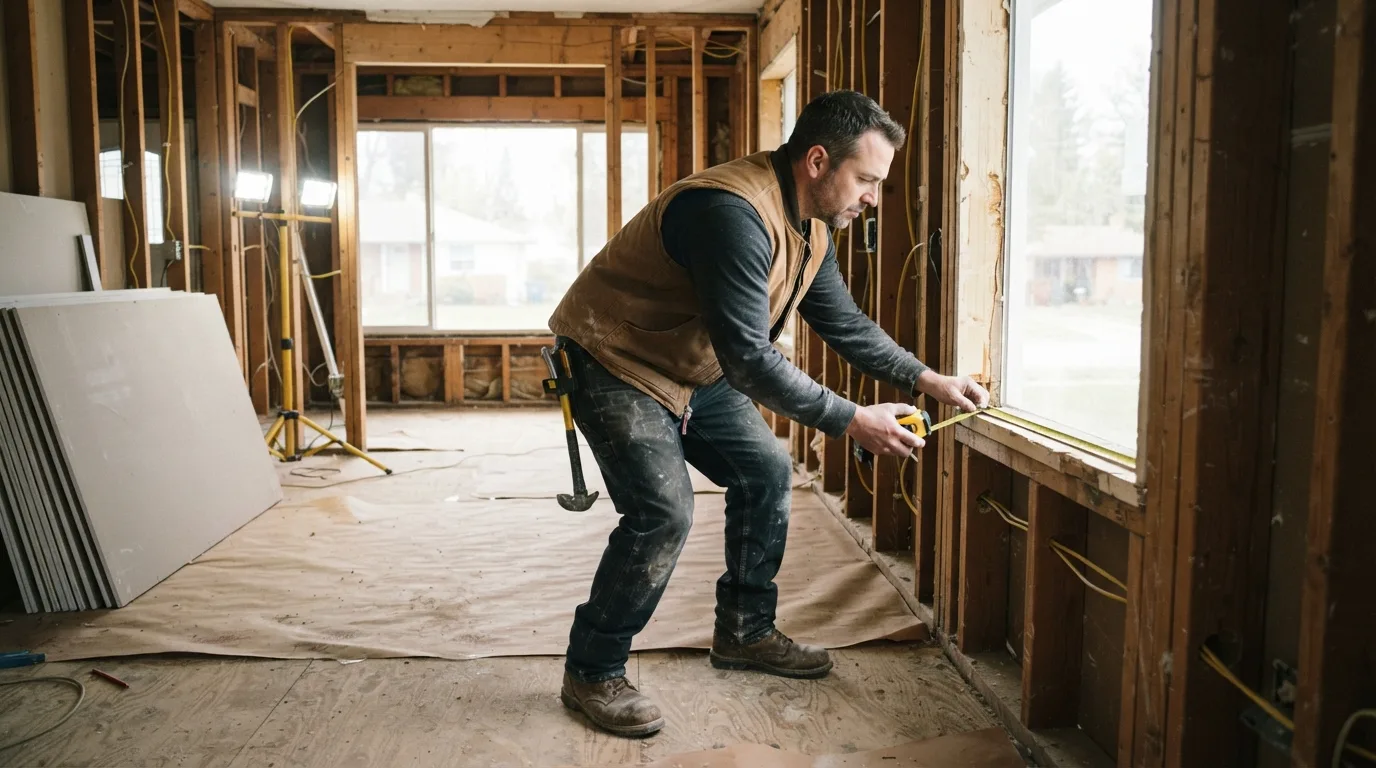
Total budgets to renovate a 2,000 sq ft house range from $30,000 (blockrenovation.com, 2026) for a cosmetic refresh up to $400,000 or more for a full gut renovation, according to Block Renovation (2026). Across broad market tiers, overall residential remodeling spans $15 to $150 (literallydarling.com, 2026) per square foot, with upper-end, systems-level work approaching $300,000, per analysis published by Literally Darling (2026). At these rates, the number of wet rooms (kitchens and bathrooms) heavily dictates where a project lands within that spectrum.
The primary financial risk in whole-home remodeling lies at the behind-the-wall threshold. While surface improvements scale predictably by floor area, projects that alter layouts or penetrate framing trigger structural and mechanical scopes that multiply capital requirements. Classifying this work correctly before committing capital establishes whether a bid represents a predictable finish schedule or an open-ended infrastructure rebuild (simplywise.com, 2026).
Renovation Costs by Project Tier#
Classifying scope into distinct project tiers during initial site evaluation remains the single most critical estimating decision for controlling budget variance (simplywise.com, 2026).
Cosmetic Refresh ($30,000 to $120,000 (blockrenovation.com, 2026))#
A cosmetic refresh on a 2,000 sq ft property runs from $30,000 to $120,000, (blockrenovation.com, 2026) which equals $15 to $60 per square foot installed, according to Block Renovation (2026) and Abode Right (2026) (aboderight.com, 2026). This scope focuses strictly on visible surfaces: interior paint, replacement flooring, light fixtures, cabinet hardware, and minor kitchen or bath finish upgrades.
Crucially, this tier leaves the existing floor plan untouched and involves zero mechanical, electrical, or plumbing re-engineering (blockrenovation.com, 2026; aboderight.com, 2026). Because walls remain closed, operational disruption stays low, allowing owners to avoid auxiliary relocation expenses during construction.
Mid-Range Remodel ($120,000 to $260,000 (aboderight.com, 2026))#
A mid-range whole-home remodel for a 2,000 sq ft residence costs between $120,000 and $260,000 (aboderight.com, 2026) representing unit costs of $60 to $130 per square foot installed, per Block Renovation (2026) (blockrenovation.com, 2026) and Abode Right (2026). This tier delivers complete remodels of kitchens and bathrooms, new flooring throughout the entire footprint, updated lighting fixtures, limited electrical or plumbing updates, and minor layout adjustments.
At this level, contractors interface with branch utilities without executing full service overhauls. Moving fixtures several inches or reconfiguring an island introduces modest trade coordination without triggering full building utility redesigns.
Full Gut Renovation to the Studs ($260,000 to $400,000 (blockrenovation.com, 2026))#
A complete gut renovation on a 2,000 sq ft home costs from $260,000 to $400,000, (blockrenovation.com, 2026) which translates to $130 to $200 per square foot installed, according to Block Renovation (2026) and Abode Right (2026) (aboderight.com, 2026). A gut rehabilitation involves stripping the structure down to bare framing, altering interior floor plans, completely replacing major mechanical, electrical, and plumbing infrastructure, and installing all-new finishes, cabinetry, and fixtures (simplywise.com, 2026).
Once drywall is removed, hidden framing defects, historical settlement, and non-compliant prior work require formal remediation. This level represents significant disruption, requiring occupants to secure off-site living arrangements throughout the project lifecycle (blockrenovation.com, 2026).
High-End or Complex Overhauls ($400,000 (blockrenovation.com, 2026)+)#
Complex residential overhauls on a 2,000 sq ft property reach or exceed $400,000, (blockrenovation.com, 2026) pushing unit costs beyond $200 per square foot, per Block Renovation (2026). Capital expenditure crosses this threshold when projects incorporate luxury-grade finishes, custom architectural millwork, structural foundation repairs, load-bearing wall removals, additions, historic home restorations, or major municipal code upgrades.
| Renovation Tier | Cost per Square Foot | Total Cost (2,000 Sq Ft) | Typical Scope Elements |
|---|---|---|---|
| Cosmetic Refresh | $15 to $60 (blockrenovation.com, 2026) | $30,000 to $120,000 | Paint, flooring, fixtures, hardware; no layout or MEP changes |
| Mid-Range Remodel | $60 to $130 (aboderight.com, 2026) | $120,000 to $260,000 | Full kitchen/baths, whole-house floors, minor layout adjustments (blockrenovation.com, 2026) |
| Full Gut Renovation | $130 to $200 (blockrenovation.com, 2026) | $260,000 to $400,000 | Demolition to framing, full MEP replacement, layout redesign |
| High-End / Complex | $200+ (blockrenovation.com, 2026) | $400,000+ | Structural modifications, additions, historic restoration, custom finishes |
Regional Labor and Market Cost Variations#
Geographic market dynamics significantly alter baseline renovation pricing. In high-cost metropolitan markets such as the San Francisco Bay Area, whole-house remodeling runs $175 to $300 (barccibuilders.com, 2026) per square foot for mid-range finishes, according to data from Barcci Builders (2026). High-end finishes and structural reconfigurations in the same market command $300 to $500 or more per square foot (barccibuilders.com, 2026).
For a 2,000 sq ft home, these regional labor premiums elevate mid-range baseline targets accordingly. Applying a localized cost multiplier prevents undercapitalizing scopes before bidding begins:
Adjusted Project Cost = Baseline Square Footage × Local Tier Unit Rate
For instance, factoring in higher regional unit rates yields a starting cost base prior to contingency reserves (barccibuilders.com, 2026).
Major Mechanical and Plumbing System Replacement Costs#
Replacing behind-the-wall utility lines represents an immediate jump from surface remodeling into high-liability infrastructure work. A full residential repipe in a 2,000 sq ft dwelling costs $25,000 to $60,000 (timberdesignbuild.com, 2026) according to Timber Design + Build (2026). For isolated rough-in alterations, moving fixtures and replacing localized supply and drainage runs typically costs $4,000 to $15,000, per Block Renovation (2026) (blockrenovation.com, 2026).
On a broader scope, major plumbing overhauls span $2,000 (tristarbuilt.com, 2025) to upwards of $15,000, while complete sewer line replacements average approximately $3,320, according to Tri-Star Built (2025). Mechanical work expands further when combined with other trades; whole-home electrical updates require $4,000 to $15,000, (blockrenovation.com, 2026) and complete HVAC replacements demand $7,000 to $15,000, Block Renovation notes. When infrastructure scopes overlap, line-item precision prevents costly mid-demolition discoveries.
Indirect Project Expenses, Permits, and Regulatory Delays#
Soft costs directly erode capital reserves if left out of baseline feasibility studies. Architectural design drawings, structural engineering reports, and municipal building permit fees run from $1,500 to $15,000 (blockrenovation.com, 2026) or more on comprehensive overhauls, according to Block Renovation (2026).
Furthermore, extended administrative reviews and bureaucratic approval delays directly increase construction costs, as documented by the U.S. Department of Housing and Urban Development (HUD) (huduser.gov). Extended holding timelines inflate loan interest, temporary staging, and project overhead before physical work commences.
Structuring Contractor Cost Bases and Bid Allowances#
To prevent structural bid discrepancies, estimators construct budgets using a disciplined two-pass framework (buildxact.com, 2026). As outlined by Buildxact (2026), a two-pass cost estimate begins by pricing direct scope requirements (labor, materials, equipment, and specialty subcontractors) before adding indirects, overhead, allowances, contingency reserves, and projected price movements.
- Direct Cost Pricing
- Supporting Cost Load
- Allowance Calibration
- Contract Pricing Model
Allowances specifically serve as temporary cost placeholders for known scope items that lack final detailed estimation during initial design, as noted in project estimation guidelines from the Idaho Transportation Department (apps.itd.idaho.gov). The need for allowances systematically decreases as architectural finish specifications mature. Once unpriced finish allowances and trade interfaces show up in bids, that is the point to bring in Home Services Marketplace help to normalize quotes against transparent market standards.
Evaluating Contract Models and Change Order Exposure#
The structure of the prime construction agreement establishes how unexpected field costs are absorbed. A change order is a written document that modifies the original contract scope, price, or completion timeline.
Change Order Value = Direct Trade Overage + General Contractor Markup
Under cost-plus contracts, any cost increase is passed directly to the client alongside the contractor's agreed percentage fee (buildxact.com, 2026). Conversely, time-and-materials contracts require the property owner to fund all additional direct labor hours and material consumption as incurred.
Material Carrying Costs and Supply Chain Shrinkage Risks#
Procuring fixtures, tile, and framing stock ahead of schedule exposes the budget to physical holding expenses.
Furthermore, budgets must account for inventory shrinkage, defined as the reduction in inventory due to breakage, theft, water or fire damage, and material obsolescence resulting from design changes or administrative delays (fmicorp.com, 2021). Holding specialized finishes on active jobsites without controlled storage risks capital loss before installation occurs.
How to Normalize Bids This Week#
Managing a 2,000 sq ft renovation demands shifting focus from cosmetic finish selections to infrastructure verification. Move past general rule-of-thumb pricing by taking these concrete procurement actions:
- Classify the exact structural scope tier across all 2,000 sq ft before requesting bids (simplywise.com, 2026).
- Audit contractor line items to replace loose fixture allowances with defined material specifications (apps.itd.idaho.gov; buildxact.com, 2026).
- Verify mechanical rough-in scopes, securing separate line pricing for supply, drain, and sewer lines (blockrenovation.com, 2026; tristarbuilt.com, 2025; timberdesignbuild.com, 2026).
- Request a standardized schedule of values to align billing milestones directly with completed physical inspections.
| Renovation Tier | Cost per Square Foot | Total Estimated Cost | Living Arrangements | Included Scope Elements |
|---|---|---|---|---|
| Cosmetic Refresh | $15 to $60 | $30,000 to $120,000 | Occupants can stay in home | Paint, flooring, hardware, lighting; no structural or MEP changes |
| Mid-Range Remodel | $60 to $130 | $120,000 to $260,000 | Partial disruption; depends on room access | Full kitchen and bath updates, flooring throughout, minor layout shifts |
| Gut Renovation | $130 to $200 | $260,000 to $400,000 | Off-site living required | Demolition to studs, layout changes, full MEP rebuild, new finishes |
| High-End / Complex | $200+ | $400,000+ | Off-site living required | Structural work, additions, historic preservation, luxury architectural finishes |
| Work Category | Cost Range | Scope Details and Cost Drivers |
|---|---|---|
| Electrical System Updates | $4,000 to $15,000 | New panel, home rewiring, adding dedicated circuits |
| HVAC System Replacement | $7,000 to $15,000 | New mechanical unit, ductwork, added climate zones |
| Plumbing: Fixture & Line Relocation | $4,000 to $15,000 | Moving rough-in fixtures, localized supply and drainage updates |
| Plumbing: Whole-Home Repipe | $25,000 to $60,000 | Complete repiping across the entire 2,000 sq ft layout |
| Sewer Line Replacement | ~$3,320 average | Main exterior line replacement via trenchless or open trenching |
| Permits and Architectural Design | $1,500 to $15,000+ | Engineering reviews, architectural drawings, municipal filing fees |
Home Renovation Cost Estimator
Estimates total home renovation costs based on home square footage, target scope tier (from cosmetic refresh to gut renovation), and an emergency contingency buffer.
Base Renovation Estimate:
Contingency Reserve:
Total Recommended Budget:
Effective Cost per Sq Ft:
Frequently Asked Questions
What is a realistic renovation budget for a 2,000 sq ft house?
A realistic budget for a 2,000 sq ft home ranges from $30,000 to $120,000 for a cosmetic refresh, $120,000 to $260,000 for mid-range remodeling, and $260,000 to $400,000 for a full gut renovation.
How does contract type affect cost overrun exposure during a remodel?
Under fixed-price contracts, contractors absorb unexpected cost increases unless handled via written change orders. Cost-plus passes added costs and contractor fees to owners, while time-and-materials bills direct labor hours and material consumption as incurred.
How much does plumbing replacement cost in a 2,000 sq ft home?
Plumbing updates range from $4,000 to $15,000 for moving lines and fixtures, while a full repipe costs $25,000 to $60,000. Full sewer replacements average about $3,320.
What do electrical and HVAC upgrades cost during a home renovation?
Whole-house electrical panel and rewiring work typically costs between $4,000 and $15,000, while complete HVAC replacements generally range from $7,000 to $15,000.
How much to renovate a house calculator?
To calculate an adjusted project cost before bidding, multiply the baseline square footage by the local tier unit rate. Across broad tiers, residential remodeling ranges from $15 to $150 per square foot, while high-cost markets like the San Francisco Bay Area range from $175 to over $500 per square foot. Total budgets for a 2,000-square-foot home span from $30,000 for cosmetic work to upwards of $400,000 for complex overhauls.
Sources
- Construction Cost Estimating Guide - apps.itd.idaho.gov (accessed 2026)
- Regulatory Implementation: Examining Barriers FromRegulatory Processes - huduser.gov (accessed 2026)
- Whole House Remodel Cost: 2026 Budget Guide - blockrenovation.com (2026-06-24)
- How to Estimate a Whole Home Remodel (Contractor's Guide) - simplywise.com (2026-04-23)
- General Contractor Pricing Guide (2026) | Buildxact US - buildxact.com (2026-10-13)
- Supply Chain Disruption: Is Now the Time for Contractors to Warehouse or Carry Inventory? | FMI Corp - fmicorp.com (2021-12-09)
- Whole House Remodel Cost Bay Area 2026 | Barcci - barccibuilders.com (2026-03-08)
- How Much Does a Home Remodel Cost? A Practical Budgeting Guide - literallydarling.com (2026-07-30)
- Avoid Hidden Costs in Home Remodeling Projects | TriStar Built - tristarbuilt.com (2025-07-25)
- Home Remodel | Abode Home Services - aboderight.com (2026-08-25)
- How Much Does a Whole-House Renovation Cost in the Hudson Valley? | Timber Design + Build - timberdesignbuild.com (2026-04-01)