
Home Winterization Checklist: Essential Steps & Costs
Short answer
To execute the essential home winterization checklist, seal envelope penetrations, service heating and chimney flues, drain exterior plumbing, and grade sump discharge lines. Addressing building envelope gaps and adding insulation yields up to 10% savings on annual energy bills, according to Energy Star. A comprehensive operational approach protects thermal integrity, safeguards combustion equipment from dangerous creosote accumulation, and prevents structural pipe bursts across freezing winter cycles.
---BODY Preparing a home for freezing weather involves addressing essential baseline maintenance protocols across key systems. Winter weather brings substantial risks of high utility costs and property damage if a home is unprepared. Sealing thermal leaks and maintaining heating appliances are vital steps in protecting a home before cold weather arrives. Managing a home through the winter requires treating the property as an integrated thermal and mechanical system.
- Envelope air sealing
- Mechanical heating tune-up
- Exterior plumbing shutdown
- Sump line grade verification
Sealing the Building Envelope and Mitigating Drafts#
Sealing thermal envelope leaks preserves indoor ambient temperatures and reduces load demands on central heating infrastructure. Sealing air leaks around the home and adding insulation can provide up to 10% savings on annual energy bills. The building envelope refers to the physical separator between the conditioned interior of a building and the unconditioned outdoor environment.
Targeted air sealing requires addressing three primary structural interface areas:
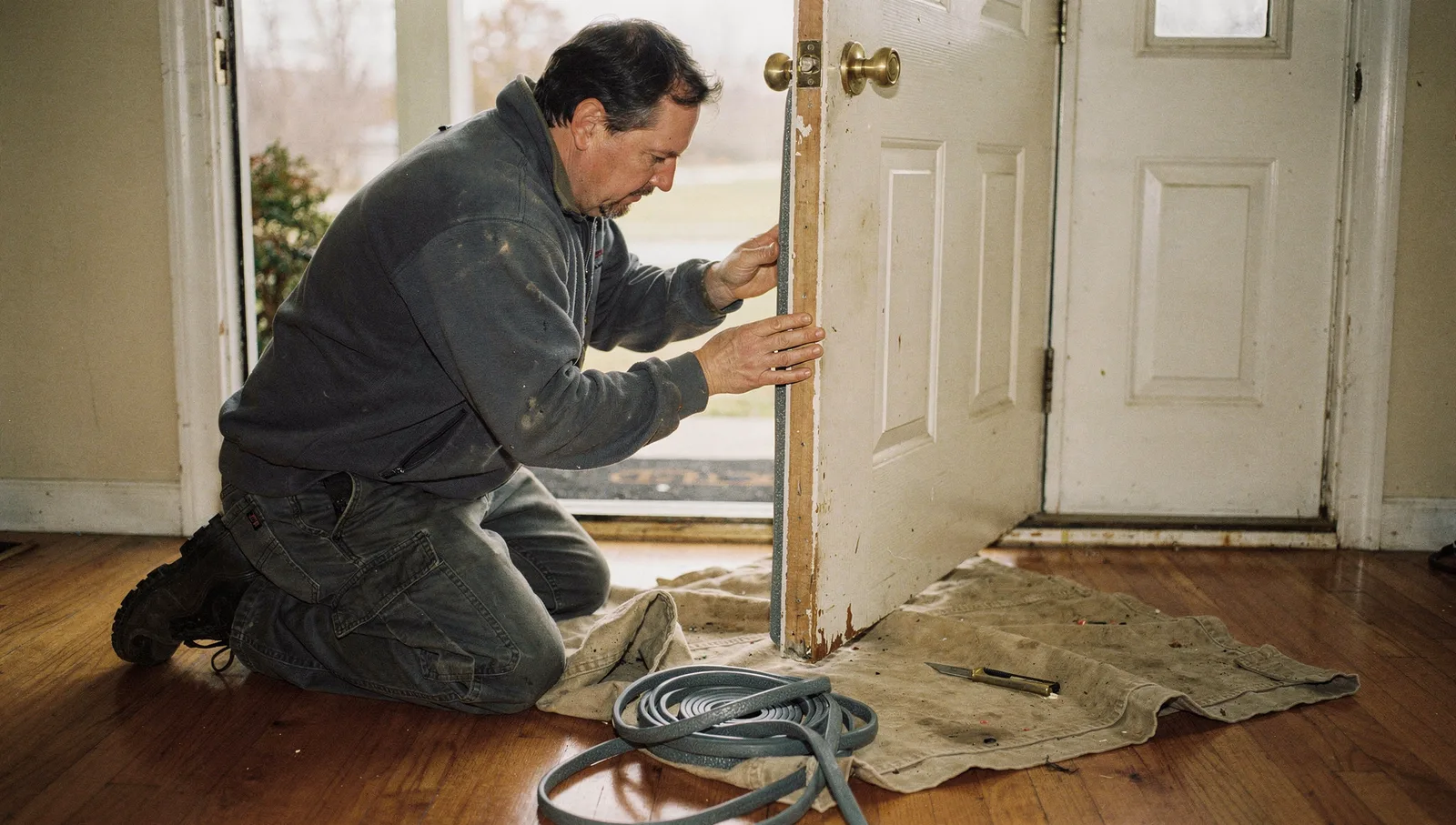
- Apply durable weatherstripping along the perimeter of operable windows and exterior doorways to eliminate perimeter drafts (energystar.gov).
- Seal larger gaps and structural fissures around window frames, entry door jambs, and exterior siding penetrations using exterior-grade caulking (leaderbank.com).
- Position a door cushion draft excluder at the base of exterior doors to block ground-level infiltration across thresholds.
Uncontrolled air exchange forces central heating equipment to run continuous cycles, driving unnecessary mechanical wear. Addressing small gaps through manual caulking and targeted gasket installation stabilizes the interior boundary before sustained sub-freezing temperatures arrive.
HVAC and Fireplace Maintenance Protocols#
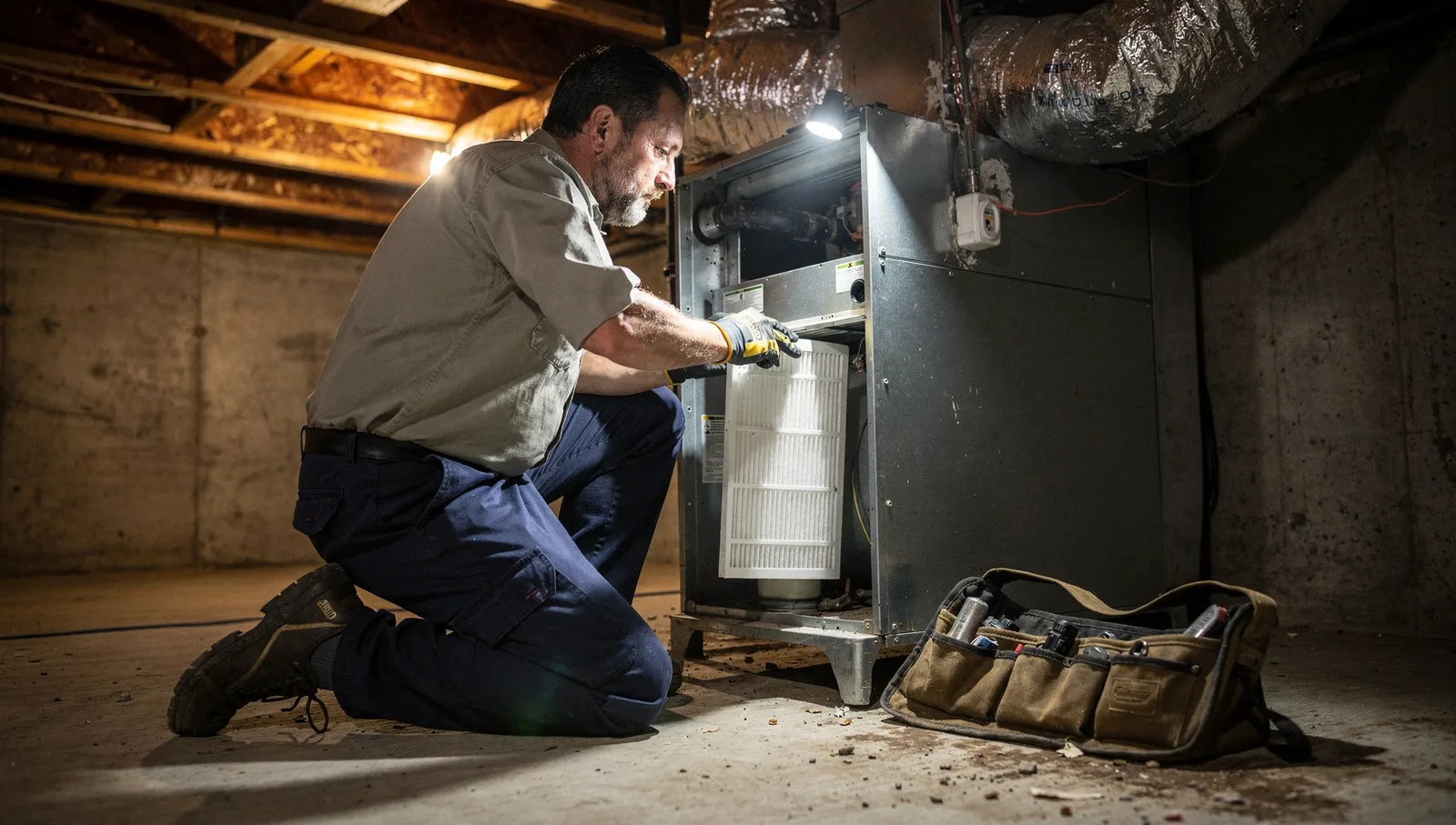
Heating systems and chimneys should be properly checked prior to winter operation. Routine chimney inspections help prevent property loss from chimney fire hazards.
According to the Texas Department of Insurance; homeowners should have their chimney inspected and cleaned prior to winter because creosote buildup can start a fire (tdi.texas.gov). Creosote is a highly flammable, carbonaceous chemical deposit that accumulates inside chimney flues during the incomplete combustion of wood fuels. Chimneys should be inspected and cleaned prior to winter because creosote buildup can start a fire.
Mechanical heating systems require equal operational scrutiny. Having the furnace inspected confirms operational safety and system longevity throughout the winter season (tdi.texas.gov). Standard maintenance steps involve changing internal furnace air filters to maintain balanced static pressure, alongside scheduling professional duct cleaning to remove accumulated particulates (fixr.com).
Once uneven room temperatures or combustion venting abnormalities show up, that is the point to bring in Home Services Marketplace help.
Exterior Plumbing and Pool Winterization Checklist#
Exterior water lines and plumbing fixtures are vulnerable to freezing temperatures and require preventative care. As water freezes within a rigid conduit, volumetric expansion creates severe internal pressure that breaches copper, PEX, and polyvinyl chloride lines.
Yahoo Finance reported on September 28, 2026, that garden hoses should be disconnected, exterior faucets shut off and drained where appropriate, and irrigation systems winterized before the first freeze to prevent burst pipes and water damage (finance.yahoo.com). Leaving a garden hose attached to an exterior spigot traps residual water inside the wall penetration, bypassing frost-free valve designs and cracking the interior pipe housing.
Swimming pools require specialized low-temperature protocols. Homeowners should winterize their pool assemblies. Constant hydrostatic movement prevents crystallization within above-ground filter manifolds, skimmers, and underground delivery conduits.
Sump Pump and Discharge Line Freeze Prevention#
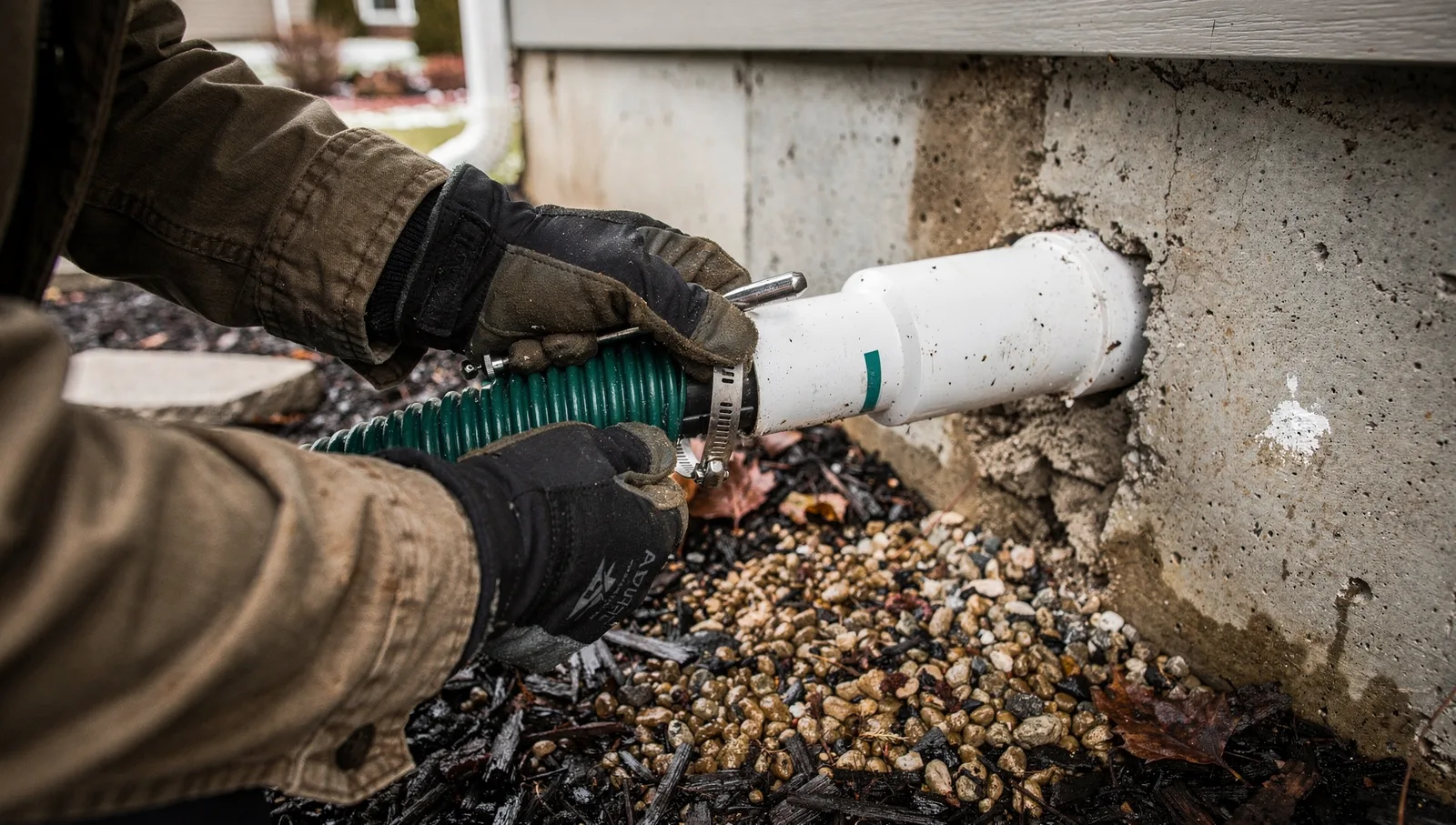
Sub-surface drainage assemblies present critical freeze vectors when exterior frost depths drop below the elevation of the exit line. Sump pump discharge lines should slope downward away from the house to allow gravity to drain water completely and prevent standing water from forming ice pockets (amfam.com). If water accumulates within low points along the exterior pipe, subsequent pump cycles force mechanical backpressure against a solid ice plug, burning out the pump motor and flooding the basement basin.
Sub-surface discharge points benefit from specialized dry-well gravel drainage pits. A pop-up drain can be installed by drilling three 1/2-inch holes in the bottom and setting the fixture in a pit filled with five gallons of pea gravel (amfam.com). This design allows residual drainage water to disperse into porous rock instead of freezing at the soil surface.
When extended sub-zero weather patterns threaten line integrity, operational configurations must change. During prolonged cold periods, homeowners can remove the discharge hose connecting the sump pump to the discharge pipe to keep standing water from freezing inside the run (amfam.com). Removing this flexible link allows the sump unit to eject water directly clear of the immediate foundation wall without risking blockage inside an extended exterior line.
Winterization Project Cost Benchmarks#
Capital allocation for home winterization divides into routine seasonal operational maintenance and comprehensive structural envelope overhauls. Evaluating trade estimates against standardized industry data allows homeowners to balance preventive operational budgets against long-term capital improvements.
According to Fixr, completing an average project checklist of professional winterizing tasks ranges in cost from $1,515 to $4,270 (fixr.com). By comparison, the average cost range to fully winterize a home using major structural upgrades and supplemental insulation spans from $13,500 to $39,250.
| Maintenance Category / Project Scope | Professional Service Cost Range | Sourced Provider |
|---|---|---|
| Service furnace and clean air ducts | $350 to $1,000 (fixr.com) | Fixr |
| Replace perimeter weatherstripping | $200 to $600 (fixr.com) | Fixr |
| Complete professional roof inspection | $100 to $600 (fixr.com) | Fixr |
| Comprehensive home winterization overhaul | $13,500 to $39,250 (fixr.com) | Fixr |
To apply these operational benchmarks this week, audit current property conditions against a systematic evaluation framework:
- Inspect exterior doorways and windows for physical light penetration, installing draft excluders and caulk where seasonal movement has cracked older seals (leaderbank.com).
- Confirm the furnace filter has been replaced and clear all mechanical flues of obstructions (tdi.texas.gov; fixr.com).
- Disconnect every exterior garden hose, open exterior drain petcocks, and verify the downward grade of the sump pump discharge line before the local forecast predicts sustained sub-freezing temperatures (finance.yahoo.com; amfam.com).
| Home System / Risk Vector | Failure Risk Under Freeze Conditions | Recommended Preventive Protocol | Execution Timing / Trigger |
|---|---|---|---|
| Thermal Envelope | Draft infiltration and excessive furnace run time | Apply weatherstripping, caulk exterior gaps, and place cushion draft excluders at doors | Prior to cold weather onset |
| Heating & Venting | Creosote chimney fires; mechanical furnace failure | Inspect and clean chimney; change furnace filter; service furnace and clean ducts | Before first seasonal fire or heating load |
| Exterior Plumbing | PEX, copper, and PVC rupture from trapped water expansion | Disconnect garden hoses, drain exterior faucets, and blow out irrigation lines | Before the first hard freeze |
| Pool Infrastructure | Internal manifold and supply line pipe cracking | Complete pool winterizing; run circulation pump continuously | Whenever temperatures dip below freezing |
| Project Scope | Professional Cost Range | Primary Objective |
|---|---|---|
| Roof Inspection | $100 - $600 | Detect exterior envelope and roof leaks prior to winter storms |
| Weatherstripping Replacement | $200 - $600 | Seal door and window perimeters to cut drafts |
| Furnace Service & Air Duct Cleaning | $350 - $1,000 | Restore static pressure balance, duct cleanliness, and combustion safety |
| Average Professional Winterizing Checklist | $1,515 - $4,270 | Complete comprehensive baseline sealing and HVAC tune-up tasks |
| Full Winterization Overhaul | $13,500 - $39,250 | Execute major heating upgrades, storm windows, and insulation additions |
Home Air Sealing & Winterization Savings Calculator
Estimate your heating bill savings and project payback period from air sealing and insulating your home's thermal envelope before winter.
Estimated seasonal heating cost:
Estimated savings per winter season:
Simple payback period:
Frequently Asked Questions
How much does professional home winterization cost?
Completing an average checklist of professional winterizing tasks costs $1,515 to $4,270. A full winterization overhaul involving major upgrades and added insulation averages $13,500 to $39,250, according to Fixr.
What outdoor plumbing steps prevent freeze damage before winter?
Disconnect garden hoses, shut off and drain exterior faucets where appropriate, and winterize irrigation systems before the first freeze. When prolonged freezes threaten sump systems, disconnect the exterior discharge hose.
What heating and chimney maintenance is required before winter?
Inspect and clean chimneys before lighting fires to eliminate flammable creosote buildup. Additionally, replace the furnace filter, have the furnace professionally inspected, and clean air ducts to preserve airflow and safety.
How should pool owners prepare for freezing temperatures?
Winterize the pool and monitor regional forecasts. According to the Texas Department of Insurance, if temperatures dip below freezing, keep the pump running continuously so flowing water prevents pipes from freezing.
Sources
- How to make your house winter ready - tdi.texas.gov (2026-10-21)
- Seal and Insulate with ENERGY STAR | ENERGY STAR - energystar.gov
- Angi Data Reveals Which U.S. Metros Are Getting a Head Start on Fall Home Maintenance - finance.yahoo.com (2026-09-28)
- Winterizing Your Home’s Sump Pump - amfam.com
- A Visual Breakdown of The Cost to Winterize a House - 3 Budgets | Fixr.com - fixr.com
- 8 Tips to Winterize Your Home: 2026 Checklist - leaderbank.com