
Contractor
What's the safest way to find a contractor without using online platforms?
Short answer
The safest way to find a contractor without using online platforms is to source candidates directly from commercial building material suppliers and active neighborhood job sites, then verify compliance through municipal permit offices. Specialty suppliers evaluate trade accounts on strict commercial terms, with programs like Deering Lumber requiring verified insurance, licensing, bonding, and a minimum annual purchase threshold of $50,000. This offline vetting path exposes operational solvency before signing a contract.
Source: DoorYard, https://blog.dooryardapp.com/whats-the-safest-way-to-find-a-contractor-without-using-online-platforms

Finding a qualified contractor without relying on online directories requires auditing operational solvency rather than promotional advertising.
Locating Candidates Through Offline Sources#
Vetting trades offline begins where physical construction materials are purchased and installed.
Neighborhood Job Sites and Active Projects#
Active neighborhood work sites provide real-world visibility into ongoing construction operations. Observing ongoing construction projects in your immediate area helps identify licensed contractors directly, as operators managing large projects under their control, such as new builds, display site signage featuring their direct contact details (qbcc.qld.gov.au).
Evaluating these job sites allows property owners to see daily operational practices firsthand. Clean site management, organized material staging, and clear professional signage demonstrate field control. Homeowners can document contractor contact information directly from the required site boards without relying on curated marketing profiles.
Building Material Suppliers and Specialty Retailers#
Commercial pro desks and trade counters operate as practical screening filters for reliable trade professionals. Local building material suppliers, hardware stores, and specialty retailers like tile shops regularly maintain referral lists of preferred contractors for property owners seeking trade work (qbcc.qld.gov.au).
Building material supplier and specialty retailer referral programs often implement strict verification criteria before endorsing tradespeople. According to industry analysis by Salesjack, dealer referral programs, such as the one operated by Deering Lumber, require a participating contractor to maintain an account in good standing, spend a minimum of $50,000, (salesjack.com) annually, and carry the licensing, bonding, insurance, and certification required by their county and state.
| Offline Sourcing Channel | Primary Screening Mechanism | Verification Basis |
|---|---|---|
| Active Job Site Signage | Direct site observation | Active project under contractor control (qbcc.qld.gov.au) |
| Specialty Retailers (e.g., Tile Shops) | Local trade counter networks | Vendor preferred contractor rosters (qbcc.qld.gov.au) |
| Lumberyard Pro Desks | Commercial credit and volume requirements | Account in good standing and $50,000 annual spend (salesjack.com) |
- Audit active neighborhood work sites
- Request pro-desk supplier referral lists
- Audit local municipal building permits
- Draft milestone contract with lien releases
Verifying Credentials and Compliance Locally#
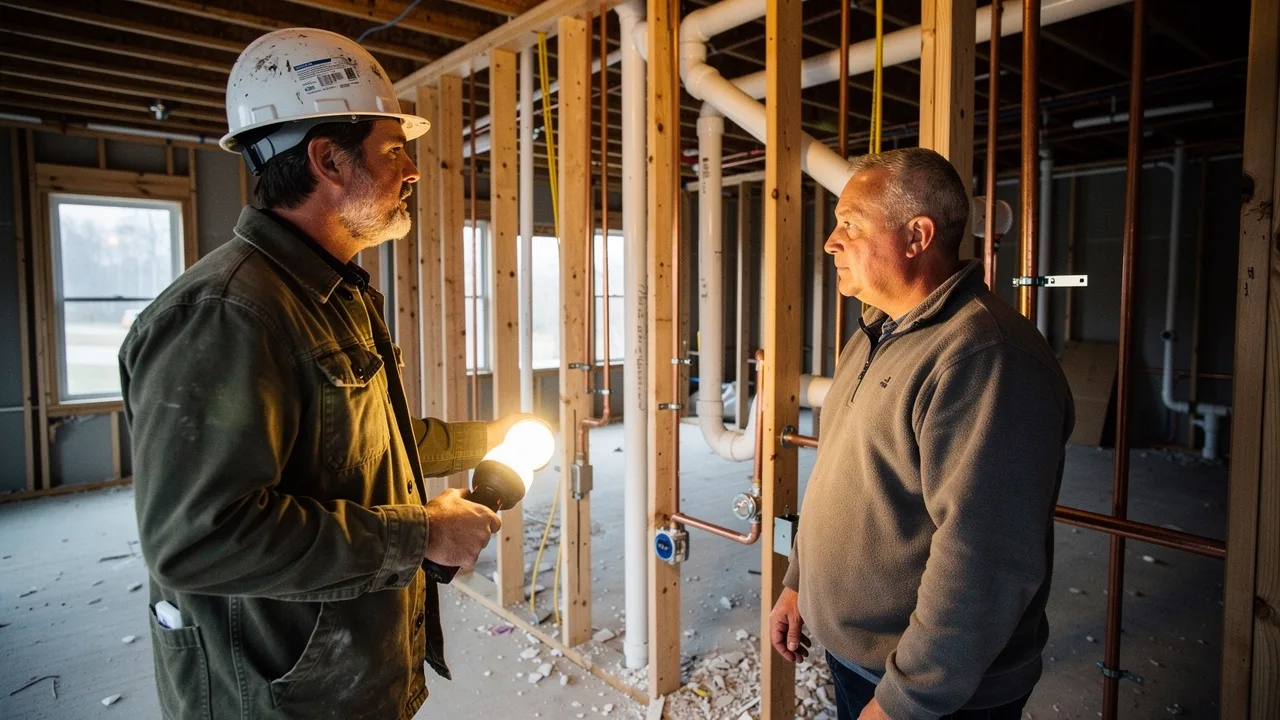
Offline vetting requires confirming trade standing through local and state regulatory offices.
Municipal Building Department Registration and Permit Audits#
Direct contact with the local building department establishes whether a project legally requires regulatory oversight. Consumers should contact their municipal building department in advance to determine if their project requires building permits and whether contractors must hold local registration or municipal licensing to perform work (cuyahogacounty.gov).
A building permit audit confirms whether an operator regularly follows building codes or works outside regulatory channels. Contractors who refuse to pull required permits leave property owners vulnerable to code violations and non-compliant installations.
Trade Licensing Scope and Jurisdiction Rules#
Licensing frameworks split significantly across municipal and state jurisdictions. An industry analysis by Soccash indicates that in Alabama; general contracting requires a Licensing Board for General Contractors (LBGC) credential for commercial projects of $100,000 (soccash.com) or more, while residential projects of $10,000 or more fall under the Home Builders Licensure Board (HBLB).
State-level statutory frameworks frequently enforce distinct financial thresholds. Reporting from Qualifying Agents shows that South Carolina mandates a Contractor's Licensing Board license when commercial construction exceeds $10,000 (qualifyingagents.com) whereas residential work exceeding $5,000 is regulated separately by the Residential Builders Commission. Other states do not split licenses by occupancy type or regulate trades under separate categories. Once multi-trade projects exceed statutory thresholds, that is the point to bring in Home Services Marketplace help to navigate jurisdictional compliance.
Insurance Certificates for Liability and Workers' Compensation#
Property owners should request evidence of active insurance coverage directly from every prospective contractor. The Federal Trade Commission notes that property owners must confirm a contractor's license with state or county authorities and directly request proof of insurance ([consumer.ftc.gov](https://consumer.ftc.gov/articles/how-avoid-scams-after-weather-emerg emergencies-and-natural-disasters)).
A certificate of insurance is a standardized document issued by an insurer verifying coverage types and limits. Homeowners should request current copies of the contractor's general liability insurance certificate as well as their workers' compensation insurance certificate before allowing work to begin (labor.maryland.gov).
Drafting Protective Contract and Milestone Payment Terms#
Written contract covenants establish structural accountability between the property owner and the builder.
Required Contractor Identification Details#
Formal written contracts require baseline business identifiers to establish corporate accountability. According to the Federal Trade Commission, a construction agreement must specify the contractor's complete legal name, physical street address, primary telephone number, and official state or municipal license number (consumer.ftc.gov).
Omitting these core identifying details exposes consumers to unverified operators. Verifying that the contract credentials match municipal permit applications confirms the legal identity of the business executing the work.
Up-Front Deposit Limits and Milestone Payment Schedules#
Payment distributions must reflect verified field progress rather than calendar targets. University of Florida IFAS Extension guidance notes that contracts should formalize payment schedules based on physical stages of completion, such as concrete slabs poured or roof dry-in milestones, or percentage-of-completion benchmarks (ask.ifas.ufl.edu).
The contract should clearly specify all advance payments, periodic construction draws, and completion amounts in writing (ask.ifas.ufl.edu). Montgomery County consumer protection guidance emphasizes that tying payments to verifiable completion milestones prevents excessive financial loss if an operator defaults, establishing that owners should never disburse funds exceeding the value of work completed to date (montgomerycountymd.gov).
Performance Bonds for Completion Guarantees#
A performance bond is a tripartite surety guarantee ensuring project completion in the event of contractor insolvency or abandonment. Montgomery County authorities report that a performance bond transfers completion risk to a third-party surety company, typically adding between 1% and 3% to the total contract price (montgomerycountymd.gov).
For example, on a $100,000 (soccash.com) home remodeling agreement carrying a bond fee:
$100,000 × 0.02 = $2,000 (soccash.com)
The property owner pays $2,000 (soccash.com) to secure complete project indemnification. The Washington State Department of Labor & Industries notes that property owners can request that a general contractor post a performance bond covering the entire cost of the project before construction begins to protect against contract nonperformance (lni.wa.gov).
Preventing Mechanics Liens from Subcontractors and Suppliers#
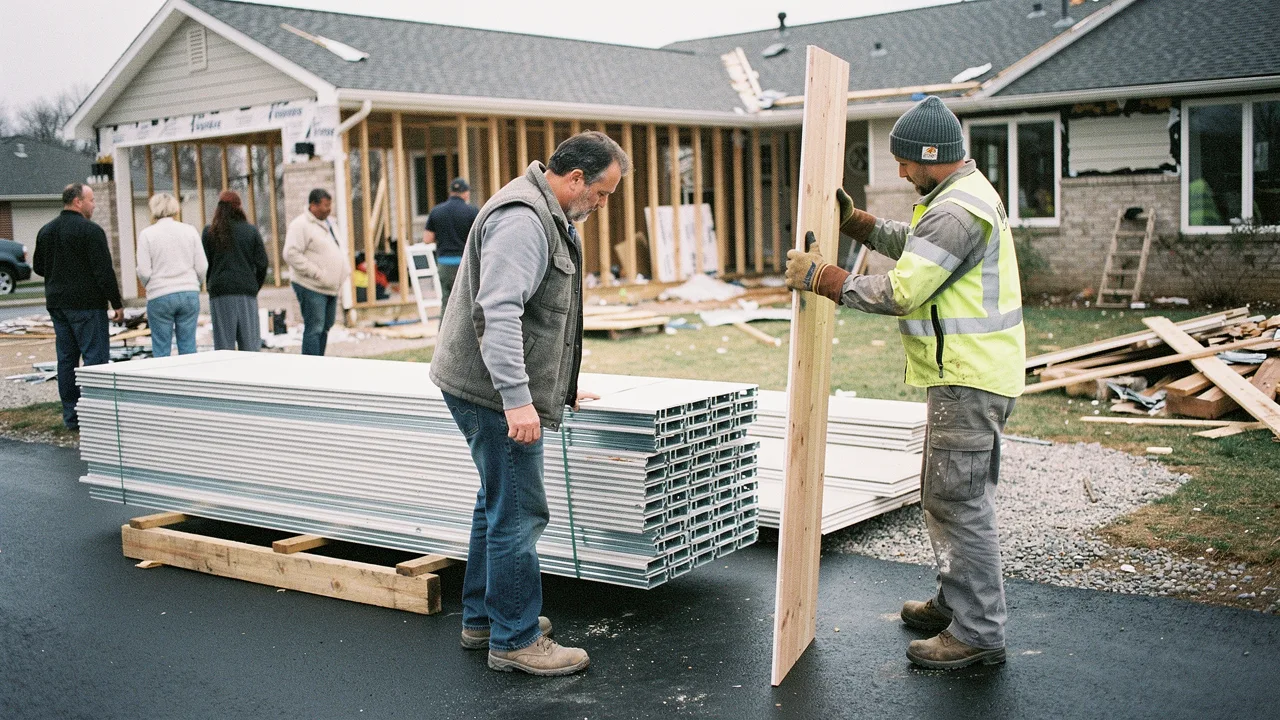
Financial disputes between primary contractors and their suppliers can result in legal encumbrances placed against the consumer's property.
Statutory Lien Waivers and Installment Releases#
A mechanics lien is a statutory legal claim recorded against real property by unpaid contractors, laborers, or material suppliers. Under Wisconsin Department of Agriculture, Trade and Consumer Protection guidance, lien waivers protect property owners by preventing general contractors, subcontractors, and suppliers from seeking collection or filing liens after payment has been issued (datcp.wi.gov).
Consumers can request lien waivers prior to disbursing final payments, and when paying in installments, can demand proportionate lien waivers covering the specific contract amount disbursed in each partial draw (datcp.wi.gov). Wisconsin administrative regulations specifically require contractors to inform consumers of their right to receive lien waivers on home improvement agreements.
Conditional and Unconditional Lien Release Protocols#
Lien management relies on sequential release documentation. The California Contractors State License Board (CSLB) advises property owners to obtain signed conditional releases from all potential lien claimants prior to releasing a progress disbursement (cslb.ca.gov).
Once payment clears, property owners must receive unconditional releases signed by each subcontractor and material supplier (cslb.ca.gov). In California, property owners are legally permitted to withhold subsequent installment payments until the contractor furnishes unconditional lien releases for the preceding billing cycle. Similarly, Washington State statute grants property owners the legal right to a completed release of lien rights once suppliers or subcontractors accept payment (lni.wa.gov).
Joint Check Agreements for Suppliers and Subcontractors#
A joint check agreement is a disbursement method where a single check is drawn payable to two separate commercial entities simultaneously. The CSLB recommends issuing joint checks made payable jointly to the prime contractor and the trade supplier or subcontractor as a straightforward method to prevent mechanics liens (cslb.ca.gov).
To execute safe offline hiring for upcoming work, property owners can take immediate action this week:
- Contact local lumberyard and trade specialty pro desks to collect preferred contractor rosters.
- Confirm active municipal licensing and permit histories at the city building department.
- Require standard certificates of insurance for both liability and workers' compensation coverage.
- Draft a stage-of-completion contract incorporating joint-check covenants and mandatory lien releases.
| Jurisdiction | Project Type | Monetary Threshold | Regulatory Body |
|---|---|---|---|
| Alabama | Residential | $10,000 or more | Home Builders Licensure Board (HBLB) |
| Alabama | Commercial | $100,000 or more | Licensing Board for General Contractors (LBGC) |
| South Carolina | Residential | Exceeds $5,000 | Residential Builders Commission |
| South Carolina | Commercial | Exceeds $10,000 | Contractor's Licensing Board |
| Protection Mechanism | Trigger or Timing | Standard Financial Cost | Primary Risk Mitigated |
|---|---|---|---|
| Performance Bond | Secured prior to construction start | Typically 1% to 3% of contract price | Contractor abandonment or nonperformance |
| Progress Payment Schedule | Tied to physical completion milestones | None (contract structure) | Paying ahead of actual completed work |
| Conditional Lien Release | Collected before issuing each payment | None (standard paperwork) | Premature waiver disputes prior to fund receipt |
| Unconditional Lien Release | Secured after funds clear each draw | None (statutory requirement) | Subcontractor or supplier mechanics liens |
| Joint Check Agreement | Issued at milestone draw disbursements | None (banking method) | Prime contractor failing to pay subcontractors |
Contractor Milestone & Safe Deposit Calculator
Calculates safe down payment thresholds and structured milestone draw amounts based on consumer protection standards (such as statutory deposit limits like California's 10% or $1,000 rule) and customary project retainage.
Statutory Benchmark Initial Deposit Cap:
Final Completion Holdback (Retainage):
Total Milestone Draw Pool:
Frequently Asked Questions
How to avoid getting scammed by a contractor?
Verify licenses directly through your state or county government, obtain written proof of general liability and workers' compensation insurance, require milestone-based payments, and collect signed lien releases for all partial draws.
What is the best way to find a reliable contractor?
Ask trade counters at local lumberyards and specialty material suppliers for vetted customer referrals, observe active neighborhood job sites with direct company signage, and confirm clean permit histories with your local building department.
What are red flags when hiring a contractor?
Key warning signs include demanding cash upfront, refusing to supply copies of insurance or trade licenses, lacking a physical street address, or declining to execute a detailed written agreement.
How to find a contractor for small jobs
Consult local specialty retailers like tile or hardware stores for preferred tradespeople, ask nearby building material suppliers, or contact your municipal building department to check registrations for local specialists.
How to find a good contractor for home improvement
Collect recommendations from local building supply pro desks, confirm state and local licensing thresholds, demand a written contract detailing full contact credentials, and tie stage-of-completion disbursements to partial lien waivers.
Hiring a contractor checklist
Ensure you verify state and county licensing, confirm active liability and workers' compensation coverage, secure a written contract with milestone payment draws, and collect lien waivers before releasing payments.
How to vet a contractor?
Vetting a contractor involves confirming credentials through local building departments and state or county authorities to ensure proper licensing, registration, and permit adherence. Property owners should request current certificates of insurance for both general liability and workers' compensation directly from the contractor before work begins. Additionally, observing active neighborhood job sites can reveal daily operational practices, while local building material suppliers and specialty retailers provide referral lists with strict verification criteria.
Sources
- How To Avoid a Home Improvement Scam | Consumer Advice - consumer.ftc.gov (2022-07-05)
- Find a licensed contractor | Queensland Building and Construction Commission - qbcc.qld.gov.au (2025-12-12)
- Hiring a Contractor - cuyahogacounty.gov (accessed 2026)
- Don't Be an Unlicensed Contractor's Next Victim! - Maryland Home Improvement Commission (MHIC) - Division of Occupational and Professional Licensing - labor.maryland.gov (accessed 2026)
- DATCP Home Liens - datcp.wi.gov (accessed 2026)
- How to Prevent a Mechanics Lien -CSLB - cslb.ca.gov (accessed 2026)
- About Liens - lni.wa.gov (accessed 2026)
- How to Hire a Home Improvement Contractor - Office of Consumer Protection - Montgomery County, MD - montgomerycountymd.gov (accessed 2026)
- FCS3318/FY1380: How to Hire and Manage Residential Contractors - ask.ifas.ufl.edu (2024-02-19)
- How To Avoid Scams After Weather Emergencies and Natural Disasters | Consumer Advice - consumer.ftc.gov (2023-12-14)
- How lumber yards can use contractor referrals to win more of the job | SalesJack - salesjack.com (accessed 2026)
- Construction License Requirements: All 50 States (2026) - soccash.com (2025-12-10)
- Residential vs Commercial Contractor Licensing by State | The Licensing Company - qualifyingagents.com (2026-10-07)